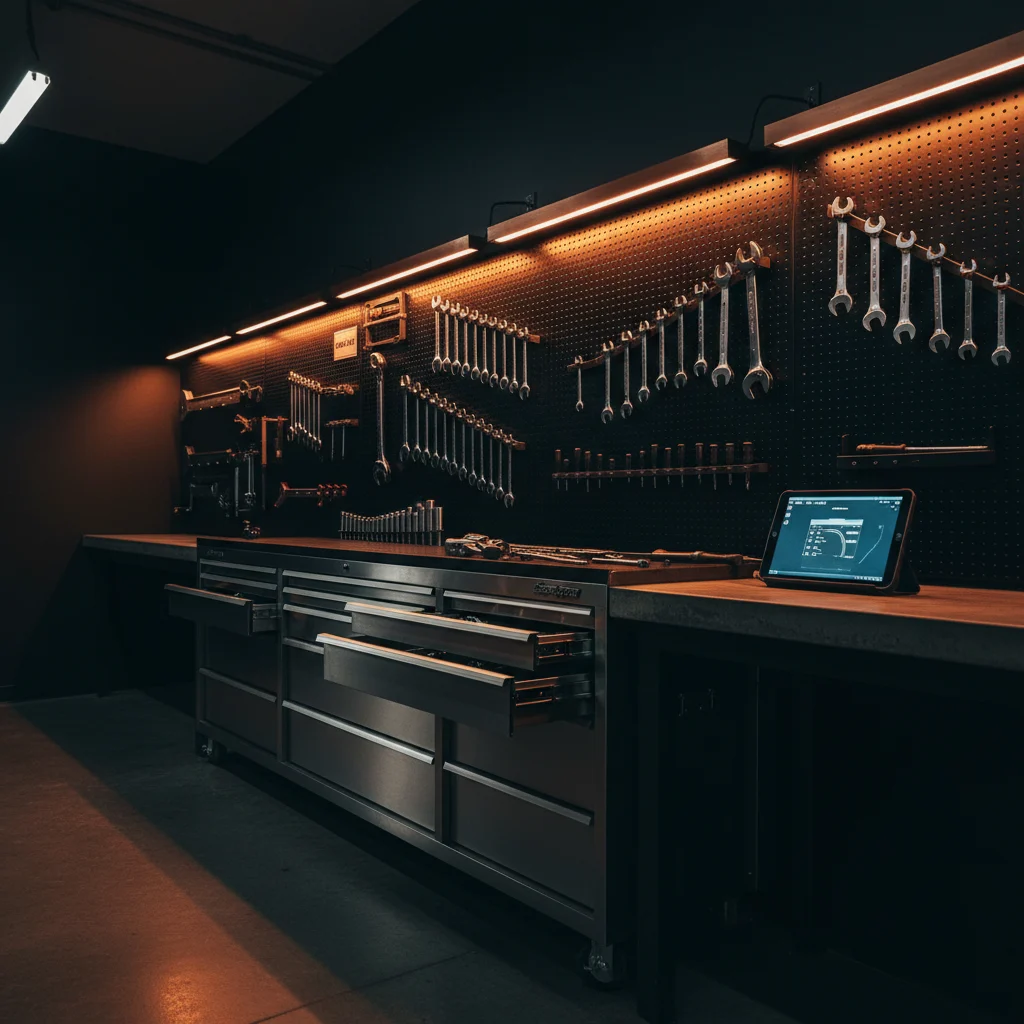
California Vehicle Emissions & Diagnostic Repair Guide for Gold River Drivers
916 Auto Repair diagnoses and fixes the root cause of emissions failures so Gold River, Fair Oaks, and Sacramento County drivers can pass their re-test with confidence. We repair — we do not certify.
What to Do When You Fail a California Diagnostic Service
California requires most gasoline-powered vehicles model year 1976 and newer to pass a biennial smog check — every two years, timed to your DMV registration renewal. Sacramento County is part of the Sacramento Valley Air Basin, which carries some of the state's strictest NOx and hydrocarbon limits. That means a vehicle that squeaked through a smog check in a lower-restriction county may still fail here.
When you fail, your smog station hands you a Vehicle Inspection Report (VIR). The VIR lists the system that failed — OBD-II readiness monitors, tailpipe readings, or a visible inspection item — but it does not tell you why the underlying component failed. That is where a diagnostic specialist steps in.
Vehicles that are 8 model years old or newer are currently exempt from the biennial smog check (the exemption is based on the model year, not the purchase year). If your DMV renewal notice says a smog check is required, your vehicle is outside the exemption window and must comply. Diesels 1998 and newer under 14,000 lbs GVWR are also subject to biennial testing in Sacramento County.
Once you have your VIR in hand, bring it to 916 Auto Repair. We perform a full OBD-II scan, live data analysis, and component-level testing to identify the exact part or system that caused the failure. We fix it — you re-test at your smog station. That separation of roles — repair specialist vs. certifying station — is intentional: it keeps the diagnostic process objective and protects you from up-selling at the testing station.
Common Causes of Emissions Failures We Repair
Most emissions failures trace back to one of a handful of root causes. Understanding what typically fails helps you know what to expect when you bring your car in — and why simply clearing a check engine light without fixing the underlying fault will only delay the re-test failure.
Catalytic Converter Failure
The catalytic converter oxidizes unburned hydrocarbons and CO before exhaust exits the tailpipe. As the catalyst degrades, tailpipe HC and CO readings climb above California thresholds. We test converter efficiency with live O2 sensor data before recommending replacement.
EVAP System Leaks
California smog checks include an EVAP (evaporative emissions) test. A loose gas cap, cracked charcoal canister, or failed purge valve triggers an EVAP monitor failure. We use a smoke machine test to pinpoint leaks without guesswork.
Oxygen Sensor Degradation
Upstream and downstream O2 sensors feed real-time data to the ECM for fuel trim management. A lazy or dead O2 sensor pushes the fuel mixture rich or lean, raising CO or HC. Replacement typically costs $150–$300 and is one of the most common emissions repairs we perform.
OBD-II Readiness Monitors Not Set
After any repair or battery disconnect, the car's onboard monitors need drive cycles to complete. If too many monitors show "Not Ready," the smog station cannot certify the vehicle even if nothing is actually broken. We advise you on the specific drive cycle needed for your vehicle's monitor set.
EGR System Faults
The EGR (exhaust gas recirculation) valve reintroduces a measured amount of exhaust back into the intake to lower combustion temperatures and reduce NOx output. A stuck-open or stuck-closed EGR valve directly spikes NOx readings — a common failure pattern in high-mileage Sacramento County vehicles.
Fuel Injector & Intake Issues
Clogged or leaking fuel injectors cause incomplete combustion, sending unburned fuel into the exhaust and through the catalytic converter. Air intake leaks upstream of the MAF sensor throw off fuel trim calculations. Both contribute to elevated emissions readings and are fully diagnosable with our scan tools.
Vehicles exempt from the biennial smog check in California include: electric vehicles (EVs) and plug-in hybrids operating in EV mode, motorcycles, gasoline vehicles model year 1975 and older, diesel vehicles model year 1997 and older, and diesel vehicles with a GVWR over 14,000 lbs regardless of year. Hybrid vehicles are not exempt — they test on the gasoline side of the powertrain.
Why Choose a Diagnostic Specialist for Emissions Repairs
A smog station's job is to test and certify — not to diagnose and repair. When you bring a failing vehicle to a STAR-certified smog station, they can tell you what failed but typically lack the equipment and expertise to trace the root cause through the entire fuel, ignition, and exhaust system. That is where 916 Auto Repair's dedicated diagnostic approach makes the difference.
We use professional-grade scan tools with manufacturer-level data access, a smoke machine for EVAP leak isolation, and an oscilloscope for sensor waveform analysis. This means we confirm a diagnosis before recommending a part — reducing the risk that you pay for a repair that does not resolve the failure.
New Gold River and Fair Oaks residents: If you moved to California from another state, your vehicle must pass a California smog check within 90 days of establishing residency. Out-of-state vehicles sometimes carry calibrations or component specs that meet other states' standards but fall short of California's. We evaluate your specific vehicle and advise you on what, if anything, needs to change before you go in for testing.
Selling your vehicle: California sellers are responsible for providing a smog certificate (dated within 90 days of sale) for most gasoline vehicles 1976 and newer. If your car is currently failing, we repair it, you get the certificate, and you present the buyer with documented repair history — a confidence signal that protects the sale price and reduces post-sale disputes.
Title transfers with a smog failure on record: If a vehicle you are buying or selling has an open smog failure from the DMV's record, the transfer can become complicated. We can document the repair with a detailed invoice that satisfies both the buyer and DMV requirements, helping the transaction move forward cleanly.
Ready to get your car road-legal again?
Bring your Vehicle Inspection Report (VIR) or call us to schedule a diagnostic appointment. We serve Gold River, Fair Oaks, Rancho Cordova, and the greater Sacramento area.
What Gold River Drivers Say About Us
Hundreds of Sacramento County drivers trust 916 Auto Repair to fix what the smog station couldn't explain.
"Great price. I will definitely keep coming back for all of my mechanic needs. The owner is honest, kind, and knowledgeable."

Mac Cronin
Recent
"Reasonable price. They were really friendly and really patient regarding my engine troubles. They gave me a quote and helped me find a way to pay. They are the best."

Nichole Rubes
Recent
"I had a great experience at this auto repair shop. They replaced the battery in my BMW quickly and professionally."

Galina Gappoev
Recent
"Great price. The owner and crew were very helpful and hospitable. Went above and beyond. Really affordable prices."

Aleksey Kaznacheyev
Recent
"Reasonable price. They were able to get me in same day and look at my brakes for no charge. They explained clearly what was wrong."

Alex Beskeen
Recent
"Mr. Warren gives 916 Auto raving reviews for their professionalism."

Dr. Roxanne Sanders
Recent
Emissions Repair — Frequently Asked Questions
Answers to the most common questions from Gold River and Sacramento County drivers who failed their smog check.
1Why did my car fail a California smog check?
The most common causes are a triggered check engine light (fault codes stored in the OBD-II system), a catalytic converter that has degraded below California threshold, an EVAP system leak, or a failed oxygen sensor. Sacramento County sits in the San Joaquin Valley Air Basin, which carries stricter NOx and HC limits than many other parts of the state — so a vehicle that passed elsewhere may still fail here. A professional diagnostic scan will pinpoint the exact fault before you spend money guessing.
2What does emissions repair typically cost at 916 Auto Repair?
Repair cost depends entirely on the root cause. A simple oxygen sensor replacement runs $150–$300 including labor. A catalytic converter replacement ranges from $400–$1,200+ depending on make and model. EVAP purge valves and solenoids typically fall in the $100–$250 range. We quote every job after a paid diagnostic, so you know the full cost before we touch anything.
3Will repairing the emissions issue guarantee I pass the re-test?
Repairs eliminate the specific fault we diagnose. However, your vehicle also needs enough drive cycles after the repair to complete its OBD-II readiness monitors — typically 50–100 miles of mixed driving. We will advise you on which monitors need to complete and how to drive the car before re-testing, so you don't waste a re-test fee on an incomplete readiness status.
4Can 916 Auto Repair diagnose emissions issues on an out-of-state vehicle?
Yes. We can scan and repair any OBD-II vehicle regardless of where it was registered. If you are a new California resident, you have 90 days after establishing residency to pass a smog check and register your vehicle. We diagnose and fix the underlying issue — you then take the vehicle to a licensed smog station for the official certification.
5What happens after I fail my smog check?
You will receive a Vehicle Inspection Report listing the failed components. You must repair the issues and present the vehicle for a re-test. California's Consumer Assistance Program (CAP) may provide repair assistance up to $500 for income-qualifying owners, and some vehicles qualify for a retirement payment instead of repair. Bring your inspection report to us and we will walk you through your options.
6Do diesel trucks need a smog check in California?
Diesel vehicles model year 1998 and newer with a GVWR under 14,000 lbs require a smog check every two years in Sacramento County. Older diesel trucks and heavy-duty vehicles over 14,000 lbs GVWR are exempt from the biennial smog check but may be subject to CARB heavy-duty inspection programs. If you are unsure, bring in your registration paperwork and we will tell you exactly what applies.
7Is a smog certification required when selling a car in California?
Yes. In California the seller is responsible for providing a valid smog certificate (obtained within 90 days of the sale) for most gasoline-powered vehicles 1976 and newer. If the car is already failing due to an underlying mechanical issue, we handle the repair first — you then get the certificate from a licensed smog station. We can also document the repairs for the buyer as a confidence-builder.
8How often is a smog check required in Sacramento County?
Most gasoline vehicles in Sacramento County must pass a biennial (every two years) smog check tied to DMV registration renewal. Vehicles that are 8 model years old or newer are currently exempt (the exemption applies to the model year — not the calendar year purchased). Your DMV renewal notice will tell you whether a smog check is required for your specific vehicle and registration cycle.
Still have questions?
We're here to help you find the answers.
Failed Your Smog Check? Let's Fix It Right.
916 Auto Repair diagnoses the root cause and performs the repair — so your next smog test is the last one you worry about. Serving Gold River, Fair Oaks, Rancho Cordova, and Sacramento County.
Visit 916 Auto Repair — Sacramento AreaGold River
Convenient to Gold River, Fair Oaks, Rancho Cordova, and central Sacramento
Hours
Monday – Saturday: 8:00 AM – 5:00 PM
Sunday: Closed