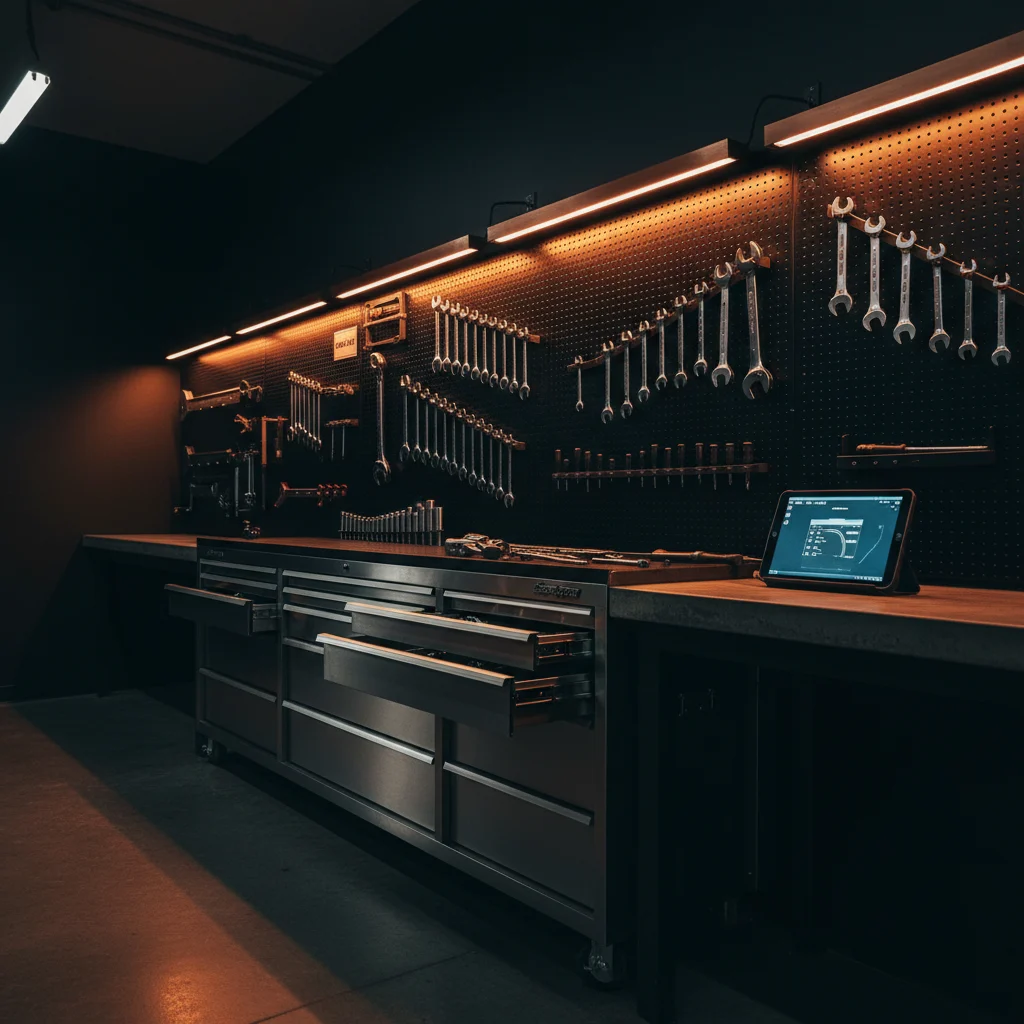
Professional Check Engine Light Diagnosis: Our Step-by-Step Process
A fault code tells you what the computer detected — not what actually broke. Our certified technicians go deeper to find the real cause and give you a repair plan you can trust.
Why Your Check Engine Light is On
The check engine light — technically called the Malfunction Indicator Lamp (MIL) — activates whenever the engine control module (ECM) detects a reading outside its programmed parameters. It covers hundreds of possible fault conditions across the engine, transmission, emissions, and fuel systems.
Some of the most common triggers we see in the Gold River area include oxygen sensor failures, catalytic converter efficiency drops, evaporative emission (EVAP) leaks — sometimes nothing more than a loose gas cap — MAF sensor contamination, ignition misfires, and vacuum leaks causing lean fuel conditions. The ECM stores a fault code for each event, but that code identifies the system that detected the anomaly, not the component that caused it.
Steady Light
An issue has been detected but is not critically active right now. Drive the vehicle carefully to our shop within a day or two for diagnosis.
Flashing Light
An active misfire is occurring. This can destroy a catalytic converter in minutes. Reduce speed, avoid hard acceleration, and get to a shop immediately.
Why Free Parts-Store Scans Fall Short
Many auto parts retailers offer free OBD-II code scans. While the codes they provide are real, they represent the effect, not the cause. A P0420 code (catalyst efficiency below threshold) could point to a failed catalytic converter, a bad downstream oxygen sensor, an exhaust leak, or even an engine-running condition like a lean or rich mixture degrading the converter over time. Replacing the converter based solely on the code — without confirming the root cause — is one of the most common and expensive misdiagnoses in auto repair.
Our 4-Step Diagnostic Process
Our technicians follow a structured diagnostic protocol that goes well beyond pulling codes. Here's exactly what happens from the moment your vehicle arrives at our Gold River shop.
- 1
Initial OBD-II System Scan & Code Retrieval
We connect a professional-grade scan tool to the OBD-II port and pull all stored, pending, and permanent fault codes across every module — engine, transmission, ABS, TPMS, and more. We document every code, its status (active vs. history), and the freeze-frame data captured at the moment the fault occurred. This snapshot tells us engine RPM, coolant temperature, fuel trim, and vehicle speed when the fault was set — context that's invisible to basic code readers.
- 2
Real-Time Data Stream Analysis
We monitor live sensor data while the engine runs — oxygen sensor voltages, fuel trim long-term and short-term values, MAF airflow, throttle position, and injector pulse width. This live data reveals patterns that stored codes can't capture: an O2 sensor that works at idle but fails under load, fuel trims that spike under certain conditions, or a misfire that only appears at a specific RPM. This step separates professional diagnosis from code guessing.
- 3
Pinpoint Testing of Specific Sensors & Circuits
Once we've identified the likely fault system from live data, we perform targeted component testing. This may include measuring sensor resistance and voltage output with a digital multimeter, performing an EVAP smoke test to locate leak points, conducting a relative compression test across cylinders, or checking injector balance. We test the component itself and its wiring circuit — because a sensor reading as "bad" may actually be receiving a bad signal due to a corroded connector or a ground fault elsewhere in the circuit.
- 4
Final Verification & Repair Recommendation
Before we recommend any repair, we verify our findings against manufacturer service data and technical service bulletins (TSBs) for your specific vehicle. You receive a clear written repair recommendation that explains what failed, why it failed, and what the repair includes. After any repair, we perform a post-repair verification drive cycle to confirm the fault does not return and all readiness monitors reset — so your vehicle is ready for a California smog check.
Trusted by Gold River & Sacramento Drivers
Real customers. Real diagnostics. Real results.
"Great price. I will definitely keep coming back for all of my mechanic needs. The owner is honest, kind, and knowledgeable."

Mac Cronin
Recent
"Reasonable price. They were really friendly and really patient regarding my engine troubles. They gave me a quote and helped me find a way to pay. They are the best."

Nichole Rubes
Recent
"I had a great experience at this auto repair shop. They replaced the battery in my BMW quickly and professionally."

Galina Gappoev
Recent
"Great price. The owner and crew were very helpful and hospitable. Went above and beyond. Really affordable prices."

Aleksey Kaznacheyev
Recent
"Reasonable price. They were able to get me in same day and look at my brakes for no charge. They explained clearly what was wrong."

Alex Beskeen
Recent
"Mr. Warren gives 916 Auto raving reviews for their professionalism."

Dr. Roxanne Sanders
Recent
Check Engine Light Questions — Answered
Straight answers about the diagnostic process, costs, and what to expect.
1How long does a car diagnostic take?
A standard OBD-II scan and initial diagnosis typically takes about one hour. Complex electrical faults — intermittent sensor failures, wiring shorts, or multi-system codes — may require additional time for pinpoint testing. We'll give you a time estimate before we begin.
2What is the diagnostic fee for cars?
We charge our standard hourly labor rate for diagnostics. Unlike a free parts-store code scan, a professional diagnosis includes live data analysis, freeze-frame review, and component-level testing — so you know exactly what's wrong before paying for any parts.
3Can I scan my own check engine light?
Yes — consumer OBD-II readers will pull the stored fault codes, and that's a useful starting point. However, a code like P0420 tells you the catalytic converter efficiency is low, not whether the converter itself has failed, an oxygen sensor is faulty, or there's an exhaust leak. Professional diagnosis identifies the root cause.
4Is it safe to drive with a check engine light?
A steady check engine light means bring the car in soon — within a day or two. A flashing or blinking check engine light signals an active misfire that can damage the catalytic converter in minutes. Pull over safely and have the vehicle towed or driven very gently to our shop.
5Will a check engine light cause me to fail emissions?
Yes. California smog inspections automatically fail any vehicle with an illuminated check engine light, regardless of what code triggered it. You must have the underlying fault repaired and complete a drive cycle so readiness monitors reset before the vehicle can pass.
6What are common check engine light codes?
The most frequent codes we see are P0420 (catalytic converter efficiency below threshold), P0171/P0174 (lean fuel condition, often a vacuum leak or MAF sensor), and P0300–P0308 (engine misfires). Each requires a different repair path — which is why code scanning alone isn't enough.
7Do you offer free check engine light scans?
We offer basic code retrieval as a courtesy during a visit. Keep in mind that reading a code is not the same as a diagnosis — the code is a symptom, not a confirmed cause. A complete diagnostic workup ensures you don't replace parts unnecessarily.
8How do I reset my check engine light?
The light clears automatically after the repair is completed and the vehicle runs enough drive cycles for the ECM to verify the fix. Clearing codes without repairing the fault only hides the problem — the light will return, and you may fail a smog inspection because the readiness monitors won't have enough time to reset.
Still have questions?
We're here to help you find the answers.
Ready to Get a Real Answer?
Stop guessing what the light means. Our technicians pinpoint the exact fault and give you a repair plan — no unnecessary parts, no surprises.
Visit Our Gold River Auto Repair Shop
Conveniently located to serve Gold River, Rancho Cordova, and the greater Sacramento area
Hours
Monday – Saturday: 8:00 AM – 5:00 PM
Sunday: Closed